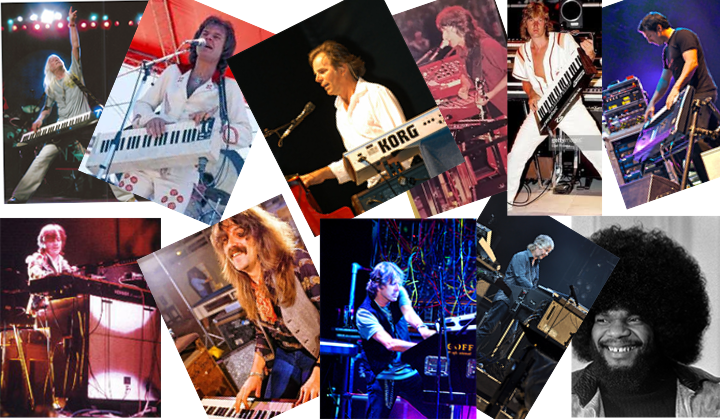
Rock music has always been driven by powerful riffs and soaring vocals, but behind many of its greatest moments lies the magic of the keyboard. From lush textures to electrifying solos, these musicians have added depth, color, and innovation to the genre. In this article, I’ll share my picks for the top 20 rock keyboardists of all time. They’re listed in no particular order and represent my personal opinion, celebrating the artistry and influence of players who helped shape the sound of rock across decades. Whether you agree or have your own favorites, this list is all about honoring their incredible contributions.
rick wakeman
 Rick Wakeman Rick Wakeman |
Rick Wakeman is an English keyboardist and composer best known for his groundbreaking work with the progressive rock band Yes. Renowned for his virtuosic technique and elaborate arrangements, Wakeman helped define the sound of 1970s prog rock with his mastery of synthesizers and classical influences. His contributions to Yes albums like Fragile and Close to the Edge showcased his ability to blend complex harmonies with rock energy. Beyond Yes, Wakeman enjoyed a prolific solo career, creating concept albums and composing for film and television. His innovative style and flamboyant performances have made him one of the most influential keyboardists in rock history.
|
keith emerson
 Keith Emerson Keith Emerson |
Keith Emerson was an English keyboardist and composer widely regarded as one of the most influential figures in progressive rock. Best known as a founding member of Emerson, Lake & Palmer (ELP), Emerson revolutionized rock music by blending classical, jazz, and electronic elements with virtuosic skill and theatrical flair. His innovative use of synthesizers and Hammond organ helped define the sound of the 1970s prog era, with landmark albums like Brain Salad Surgery showcasing his technical mastery. Beyond ELP, Emerson pursued solo projects and film scoring, leaving a lasting legacy as a pioneer who expanded the possibilities of keyboard performance in rock.
|
Jon Lord
 Jon Lord Jon Lord |
Jon Lord was an English keyboardist and composer best known as a founding member of Deep Purple, where his powerful Hammond organ sound became a defining element of the band’s music. Blending classical influences with hard rock, Lord pioneered a unique style that gave Deep Purple its signature heavy yet melodic edge, particularly on albums like Machine Head and Made in Japan. Beyond his work with Deep Purple, he collaborated with Whitesnake and pursued solo projects, including orchestral compositions that showcased his versatility. Revered as one of rock’s greatest keyboard innovators, Lord’s legacy continues to inspire musicians across genres.
|
Richard Wright
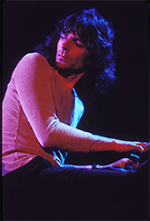 Richard Wright Richard Wright |
Richard Wright was an English keyboardist and songwriter best known as a founding member of Pink Floyd. His atmospheric playing and innovative use of keyboards were central to the band’s signature sound, adding depth and texture to classic albums like The Dark Side of the Moon, Wish You Were Here, and The Wall. Wright’s contributions included both instrumental brilliance and songwriting, co-creating timeless tracks such as “Us and Them” and “The Great Gig in the Sky.” His subtle yet essential role helped shape Pink Floyd’s progressive and experimental style, leaving a lasting legacy as one of rock’s most influential keyboardists.
|
nicky hopkins
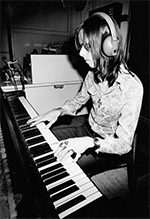 Nicky Hopkins Nicky Hopkins |
Nicky Hopkins was an English pianist and keyboardist renowned for his exceptional session work with some of the biggest names in rock history. Known for his expressive, melodic playing, Hopkins contributed to classic recordings by The Rolling Stones, The Who, The Kinks, and The Beatles, among many others. His elegant piano lines added depth and character to iconic tracks like “Angie” and “Sympathy for the Devil,” making him one of the most sought-after session musicians of the 1960s and 1970s. Beyond collaborations, Hopkins also released solo albums, leaving a lasting legacy as one of rock’s most influential keyboardists.
|
Richard Tandy
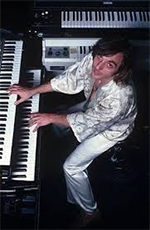 Richard Tandy Richard Tandy |
Richard Tandy is an English keyboardist best known for his long-standing role in the Electric Light Orchestra (ELO), where his rich, layered arrangements helped define the band’s symphonic rock sound. Joining ELO in the early 1970s, Tandy became a key creative force, blending piano, synthesizers, and electronic textures to complement Jeff Lynne’s songwriting. His versatility and innovative use of technology contributed to classic albums like Out of the Blue and Discovery, making him an essential part of ELO’s success. Beyond the band, Tandy worked on solo projects and collaborations, earning recognition as one of rock’s most influential keyboardists.
|
geoff downes
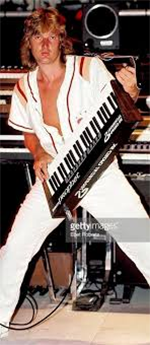 Geoff Downes Geoff Downes |
Geoff Downes is an English keyboardist and songwriter best known for his work with the progressive rock bands Yes and Asia, as well as for co-founding The Buggles. Downes first gained fame with The Buggles’ hit “Video Killed the Radio Star,” before joining Yes in 1980 and contributing to their album Drama. He later co-founded Asia, where his lush keyboard arrangements helped define the band’s melodic, arena-rock sound on hits like “Heat of the Moment.” Renowned for his versatility and mastery of synthesizers, Downes remains a key figure in progressive and classic rock, continuing to perform and record with both Yes and Asia.
|
patrick moraz
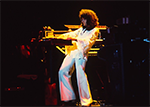 Patrick Moraz Patrick Moraz |
Patrick Moraz is a Swiss keyboardist and composer best known for his work with the progressive rock bands Yes and The Moody Blues. Moraz joined Yes in 1974, contributing his virtuosic playing and adventurous use of synthesizers to the acclaimed album Relayer, where his jazz and classical influences added a distinctive edge to the band’s sound. Later, he became a key member of The Moody Blues from 1978 to 1991, helping shape their lush, symphonic style during a period of commercial success. Renowned for his technical skill and creativity, Moraz remains an influential figure in the world of progressive rock.
|
tony kaye
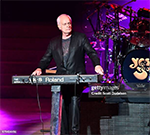 Tony Kaye Tony Kaye |
Tony Kaye is an English keyboardist best known as a founding member of the progressive rock band Yes. Joining the group in 1968, Kaye played a crucial role in shaping their early sound with his Hammond organ and piano work on classic albums like The Yes Album. His style emphasized rich textures and melodic support rather than flashy solos, giving Yes a distinctive foundation during their formative years. After leaving the band in 1971, Kaye later returned for the hugely successful 90125 era in the 1980s and also worked with groups like Badger and Detective. His contributions remain an essential part of Yes’s legacy and progressive rock history.
|
gary wright
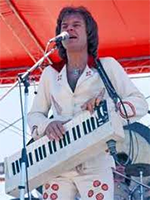 Gary Wright Gary Wright |
Gary Wright was an American singer, songwriter, and keyboardist best known for his pioneering use of synthesizers in rock music and his hit songs “Dream Weaver” and “Love Is Alive.” Starting his career as a member of the British band Spooky Tooth, Wright later launched a successful solo career in the 1970s, blending rock with electronic textures that helped shape the sound of the era. His innovative approach to keyboards and synthesizers made him a trailblazer in integrating electronic instruments into mainstream rock. Wright’s music remains influential for its melodic richness and forward-thinking production.
|
roger powell
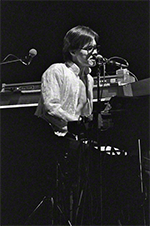 Roger Powell Roger Powell |
Roger Powell is an American keyboardist, composer, and synthesizer pioneer best known for his work in progressive rock and electronic music. He gained prominence as a member of Todd Rundgren’s Utopia, where his innovative use of synthesizers and technical mastery helped shape the band’s futuristic sound. Powell was also an early advocate of computer-based music, developing cutting-edge techniques that influenced electronic and rock genres alike. In addition to his work with Utopia, he released solo albums such as Cosmic Furnace, showcasing his experimental approach to keyboards. His contributions remain highly regarded among fans of progressive and electronic music.
|
edgar winter
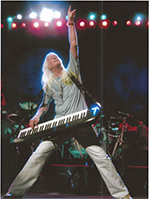 Edgar Winter Edgar Winter |
Edgar Winter is an American musician, singer, and multi-instrumentalist best known for his innovative blend of rock, jazz, blues, and pop. Born in Beaumont, Texas, Winter rose to fame in the early 1970s with his band, The Edgar Winter Group, and their hit album They Only Come Out at Night, which featured classics like “Frankenstein” and “Free Ride.” Renowned for his virtuosity on keyboards and saxophone, Winter broke barriers by incorporating synthesizers into rock music, influencing generations of artists. His dynamic stage presence and genre-crossing style have made him a lasting figure in American music history.
|
billy preston
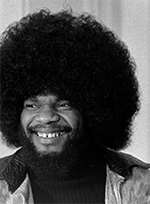 Billy Preston Billy Preston |
Billy Preston was an American musician, singer, and songwriter celebrated for his mastery of the keyboard and his influential role in soul, rock, and pop music. Born in Houston, Texas, Preston began performing as a child prodigy and went on to collaborate with legendary artists such as The Beatles, The Rolling Stones, and Ray Charles. Often called the “Fifth Beatle” for his work on tracks like “Get Back,” he also enjoyed solo success with hits like “Will It Go Round in Circles” and “Nothing from Nothing.” Known for his energetic performances and gospel-inspired style, Preston left an enduring mark on modern music before his passing in 2006.
|
steve winwood
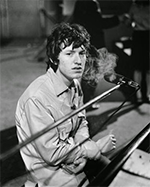 Steve Winwood Steve Winwood |
Steve Winwood is an English singer, songwriter, and multi-instrumentalist renowned for his soulful voice and pioneering contributions to rock, blues, and jazz fusion. Born in Birmingham, England, Winwood first gained fame as a teenage prodigy with the Spencer Davis Group before co-founding influential bands like Traffic and Blind Faith. His solo career soared in the 1980s with hits such as “Higher Love” and “Back in the High Life Again,” earning him Grammy Awards and global acclaim. Known for his versatility on keyboards and guitar, Winwood remains a celebrated figure whose music bridges genres and generations.
|
don airey
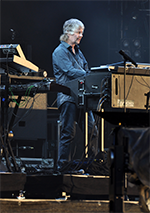 Don Airey Don Airey |
Don Airey is an English keyboardist and composer best known for his work with the legendary rock band Deep Purple, as well as collaborations with acts like Rainbow, Ozzy Osbourne, and Whitesnake. Born in Sunderland, England, Airey built a reputation for his virtuosic playing and ability to blend classical influences with hard rock. Before joining Deep Purple in 2002, he contributed to numerous iconic albums across the rock and metal genres, leaving an indelible mark with his distinctive keyboard solos and arrangements. His career spans decades, making him one of the most respected keyboardists in rock history.
|
derek sherinian
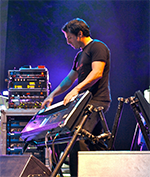 Derek Sherinian Derek Sherinian |
Derek Sherinian is an American keyboardist, songwriter, and producer celebrated for his powerful, virtuosic style that blends rock, metal, and jazz fusion. Born in Los Angeles, California, Sherinian first gained prominence as a touring keyboardist for Alice Cooper and later as a member of Dream Theater, where his technical skill and creativity earned widespread acclaim. He has released numerous solo albums and collaborated with artists such as Billy Idol, Yngwie Malmsteen, and Joe Bonamassa, showcasing his versatility and innovative approach to modern progressive music. Today, Sherinian is regarded as one of the most influential keyboardists in rock and metal.
|
jonathan cain
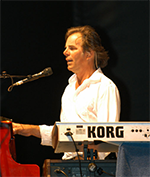 Jonathan Cain Jonathan Cain |
Jonathan Cain is an American musician, songwriter, and keyboardist best known as a longtime member of the rock band Journey. Born in Chicago, Illinois, Cain joined Journey in 1980 and played a pivotal role in shaping their signature sound, co-writing some of the band’s biggest hits, including “Don’t Stop Believin’,” “Open Arms,” and “Faithfully.” Before Journey, he was a member of The Babys and later contributed to Bad English, further cementing his reputation as a prolific songwriter and performer. Cain’s melodic keyboard work and lyrical sensibility have made him an enduring figure in classic rock history.
|
mike pinder
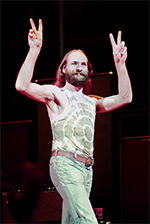 Mike Pinder Mike Pinder |
Mike Pinder is an English musician and songwriter best known as a founding member and keyboardist of the progressive rock band The Moody Blues. Born in Birmingham, England, Pinder was instrumental in shaping the band’s signature symphonic sound through his pioneering use of the Mellotron, an early keyboard instrument that added orchestral textures to rock music. He wrote and sang several of the group’s classic songs, including “Melancholy Man” and “The Sun Set,” and contributed to their landmark album Days of Future Passed, which helped define progressive rock. Pinder’s innovative approach and lyrical depth have made him a key figure in modern music history.
|
john paul jones
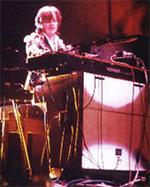 John Paul Jones John Paul Jones |
John Paul Jones is an English musician, composer, and producer best known as the bassist and keyboardist for the legendary rock band Led Zeppelin. Born in Sidcup, England, Jones brought a rich musical background to the group, contributing not only his bass lines but also his innovative keyboard work on classics like “No Quarter” and “Trampled Under Foot.” His mastery of instruments such as the Mellotron, electric piano, and synthesizers added depth and texture to Led Zeppelin’s sound, helping define their progressive and experimental edge. Beyond Zeppelin, Jones has enjoyed a diverse career in music, collaborating with numerous artists and continuing to influence generations of musicians.
|
geddy lee
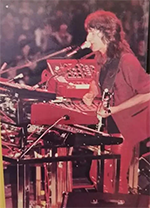 Geddy Lee Geddy Lee |
Geddy Lee is a Canadian musician best known as the lead vocalist, bassist, and keyboardist for the progressive rock band Rush. Born in Toronto, Ontario, Lee became a defining force in rock music through his intricate bass lines and innovative use of synthesizers and keyboards, which added depth and complexity to Rush’s sound during the late 1970s and 1980s. His keyboard work on albums like Signals and Power Windows helped shape the band’s progressive and electronic direction, blending technology with musicianship. Lee’s versatility and creativity have made him one of the most influential figures in modern rock.
|
conclusion
In the end, the beauty of rock music lies in its diversity, and the keyboardists who shaped its sound each brought something unique to the table. From virtuosic solos to atmospheric textures, these artists expanded the boundaries of what rock could be, proving that keyboards are as essential as guitars and drums in creating timeless music. While this list reflects my personal opinion and isn’t ranked in any particular order, I hope it sparks appreciation for the incredible talent behind the keys and inspires you to revisit their work—or discover it for the first time. After all, the conversation about “the greatest” is never truly finished, and that’s what makes music so exciting.

Test3
Final TestTerms & Conditions
Report
My comments